The AfriScout Regenerative Grazing Project has officially been listed with Verra under the VM0042 methodology, marking a major milestone for climate and community impact.
The initial listing covers nearly 300,000 hectares of rangeland across Ethiopia’s Oromia, Somalia, and South Ethiopia regions. As a grouped project, additional areas will be added—bringing the total to 1.5 million hectares managed under regenerative grazing practices. To date, more than 250,000 pastoralists across 70 communities, with a combined herd of over one million animals, are participating. This makes AfriScout one of the largest grassland regeneration-based carbon projects in the world, with the potential to expand rapidly to 4 million hectares in surrounding communities.
Over the project’s 30-year lifespan, it is expected to remove 44 million tCO2e from the atmosphere. Importantly, the majority of carbon credit revenues will go directly to the participating communities, creating long-term economic and ecological benefits.
Restoring Ecosystems Through Regenerative Grazing
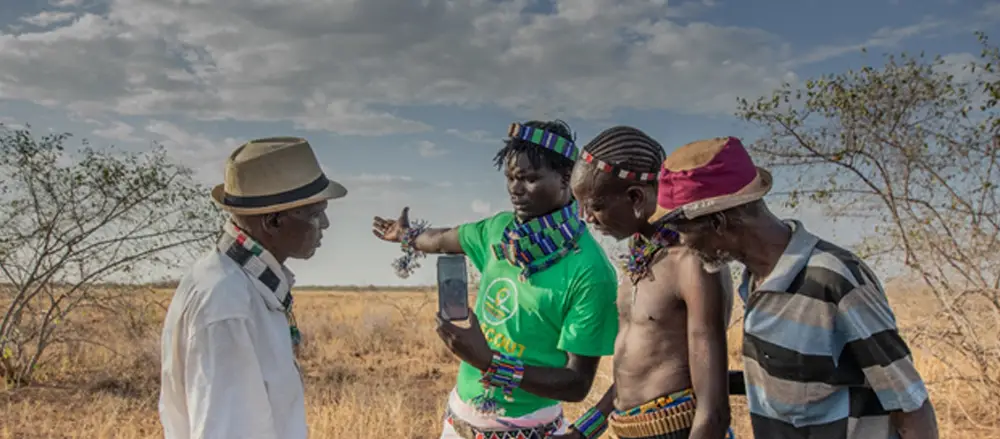
Delivered in partnership with indigenous pastoralist communities, the project employs Adaptive Multi-Paddock (AMP) grazing—sometimes called holistic planned grazing—at a rangeland scale. This method mimics the natural behavior of wild herds, rotating livestock to graze, till, and fertilize soil in ways that restore critical ecosystems. Healthier soils grow deeper roots, retain more water, and enable grasslands to recover, benefiting both people and wildlife that depend on them.
Proven Impact for Climate and Communities
The project is designed for enduring impact on both climate resilience and community livelihoods. A third-party, 2-year randomized control trial has already shown significant improvements in pasture quality, availability, and biodiversity within AfriScout project areas. Participating households report higher incomes and greater food security thanks to healthier livestock and increased productivity.
Commitment to High-Integrity Carbon Credits
AfriScout is committed to bringing high-integrity carbon credits to market. The project follows Verra’s VM0042 methodology, which quantifies greenhouse gas emission reductions and soil organic carbon removals from improved land management practices. In addition, AfriScout is pursuing Climate, Community, and Biodiversity (CCB) certification to further demonstrate the project’s positive impact.